







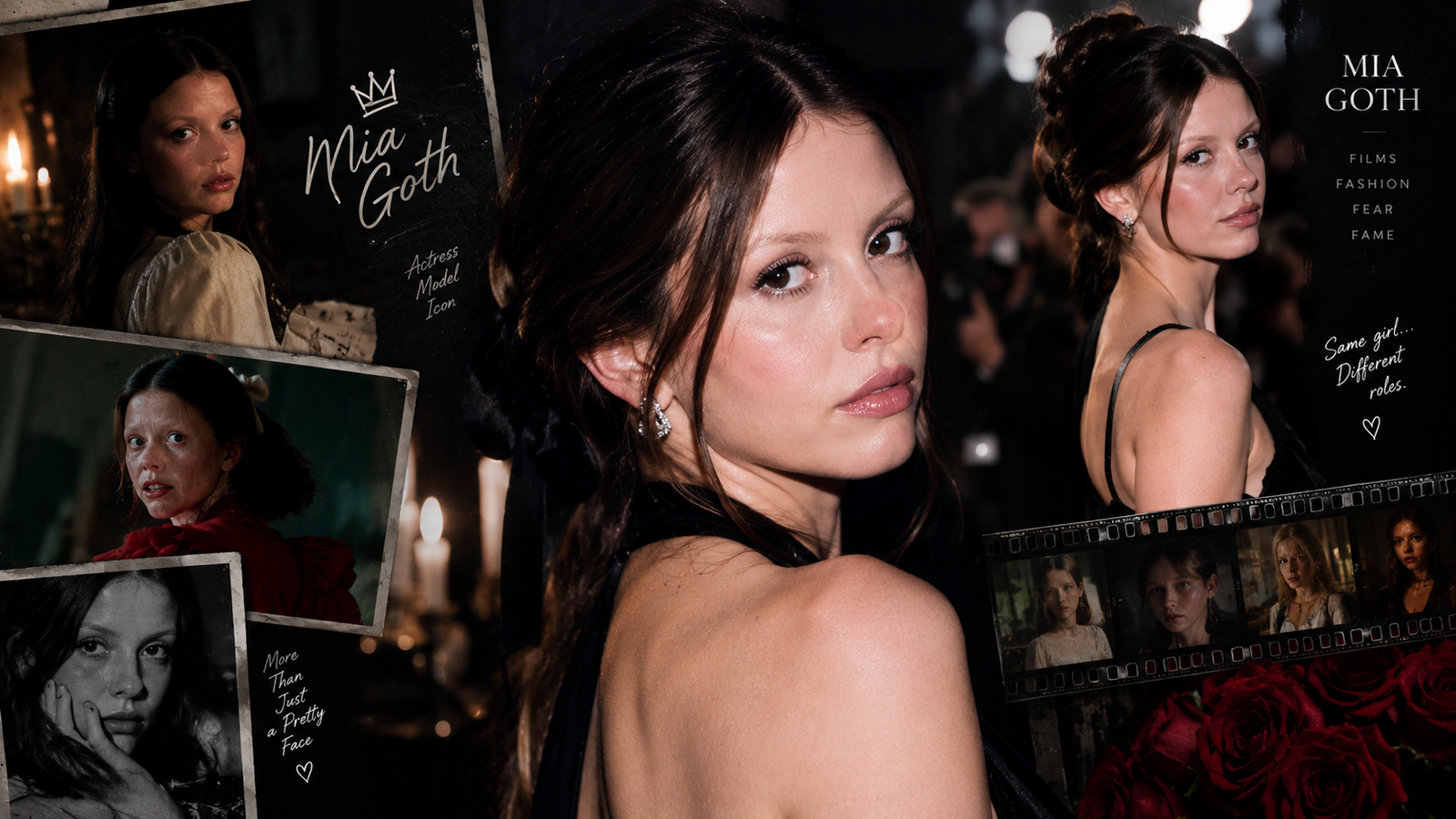
Few performers capture attention the way Mia Goth does. With a face that can shift from porcelain vulnerability to something far more unsettling in a single frame, she has carved out a space that feels both classic and completely of the moment. From arthouse experiments to the blood-soaked heart of contemporary horror, her work refuses easy labels. What stands out is the commitment. Whether buried under hours of prosthetic makeup or delivering a quiet monologue that lingers long after the credits, she brings a rare intensity that feels lived-in rather than performed. This article digs into the full picture of her journey, the films that defined her, the personal path that shaped her, and why audiences and filmmakers keep returning to her singular presence.
Her story is one of movement and reinvention. Born into a world that spanned continents, she learned early how to adapt, observe, and inhabit different skins. That skill has served her well on screen. Today she stands as one of the most compelling actors of her generation, equally at home in intimate character studies and large-scale genre pieces. The following sections explore every major chapter, from childhood travels to the creative partnership that turned her into a scream queen, and the projects that continue to expand her range.
Early Years Across Continents and Cultures
Mia Goth entered the world on October 25, 1993, at Guy’s Hospital in London. Her full name, Mia Gypsy Mello da Silva Goth, already hinted at a life that would refuse to stay in one place. Her mother, Brazilian and working as a waitress, was only twenty when she gave birth. Her father, Canadian and originally from Nova Scotia, was less of a constant presence in the early years. The family background carried artistic roots as well. Her maternal grandmother is the Brazilian actress Maria Gladys, and her maternal grandfather is the American artist Lee Jaffe. Those connections would later prove formative.
Just weeks after her birth, mother and daughter left for Brazil so the young parent could lean on family support. In Rio de Janeiro and the surrounding cultural world, the child spent formative time on film sets with her grandmother. Those early glimpses of cameras, lights, and performance planted a seed. At age five the pair returned to the United Kingdom. A few years later they attempted life in Canada with her father. The stretch proved difficult. In a single school year she attended multiple schools, sometimes as many as seven or nine depending on the account. The instability forced constant reinvention. She has spoken about inventing stories for classmates, trying on different personalities simply to fit in. When she was twelve, she and her mother settled for good in southeast London. There she attended Sydenham School while her mother continued working long hours in restaurants. The single-parent household taught resilience and independence early.
Those years of movement left a clear mark. Rather than leaving her rootless, they trained an instinct for observation and adaptation. She has described the experience as an early form of character work. Watching people, reading rooms, and adjusting her own presence became second nature. The artistic lineage on her mother’s side reinforced the idea that creative work could be a legitimate path. By her early teens the foundation was already in place for a career that would demand exactly those skills.
From Teenage Model to First Acting Opportunities
At thirteen or fourteen, while attending the Underage Festival in London, she was spotted by fashion photographer Gemma Booth. The discovery led to a contract with Storm Model Management. Suddenly the teenager was appearing in campaigns for houses such as Miu Miu and Prada and landing pages in magazines including British Vogue, Vogue Italia, W, and AnOther. The modeling work paid bills and opened doors, yet it never felt like the final destination. She has said acting was always the real ambition.
By sixteen she was auditioning for film roles. After finishing sixth form she landed her first major part in Lars von Trier’s Nymphomaniac: Volume II in 2013. The Danish director’s ambitious, explicit, and polarizing project placed her opposite Charlotte Gainsbourg, Stellan Skarsgård, and, significantly, Shia LaBeouf. The experience was intense and formative. It also introduced her to the man who would become her long-term partner. Around the same period she appeared in the British television series The Tunnel and short films that kept her working.
The early modeling years taught her how to hold a camera’s attention and how to transform physically. Those lessons transferred directly to acting. She approached roles with the same discipline she had brought to fashion shoots, treating every project as an opportunity to disappear into someone else. The transition from runway and editorial work to serious dramatic roles was not always seamless, but the foundation proved solid. By her early twenties she had already collected experience with challenging material and established directors.
Building a Reputation in Independent and Arthouse Cinema
After her debut, the work continued in thoughtful, often demanding projects. In 2015 she took the lead in Stephen Fingleton’s post-apocalyptic drama The Survivalist. Playing Milja, a young woman navigating a brutal world of scarcity and violence, she earned a British Independent Film Award nomination for Most Promising Newcomer. The performance showed she could carry a film with quiet intensity rather than big speeches.
The following year brought Gore Verbinski’s A Cure for Wellness, a glossy psychological horror in which she played the ethereal Hannah. The film’s baroque style and unsettling atmosphere suited her ability to project both fragility and hidden strength. She also appeared in the disaster epic Everest and the Spanish-language thriller Marrowbone. Each role added texture. In 2018 she joined Luca Guadagnino’s ambitious remake of Suspiria as Sara Simms, sharing the screen with Dakota Johnson and Tilda Swinton in a story of dance, witchcraft, and female power. The same year she appeared in Claire Denis’s High Life opposite Robert Pattinson, a stark science-fiction meditation on isolation and desire.
Period drama arrived with Autumn de Wilde’s Emma. in 2020, where she played the sweet but somewhat dim Harriet Smith opposite Anya Taylor-Joy. The role demonstrated range. She could do social comedy and quiet longing as convincingly as she could do dread. These years established her as a reliable presence in prestige independent cinema. Directors trusted her with complex material, and audiences began to recognize the particular electricity she brought to every frame. The groundwork was complete for a larger breakthrough.
The X Trilogy and the Birth of a Horror Icon
Everything shifted in 2022 with Ti West’s X. In the film she played dual roles: the ambitious young adult-film performer Maxine Minx and the elderly, deeply unhinged Pearl. The transformation into Pearl required roughly ten to twelve hours in the makeup chair under the skilled hands of artist Sarah Rubano. The physical ordeal was matched by an emotional one. She had to find the humanity inside a character driven by loneliness, jealousy, and faded dreams. The result was a dual performance that critics immediately singled out. X paid loving, bloody homage to 1970s grindhouse cinema while feeling entirely contemporary.
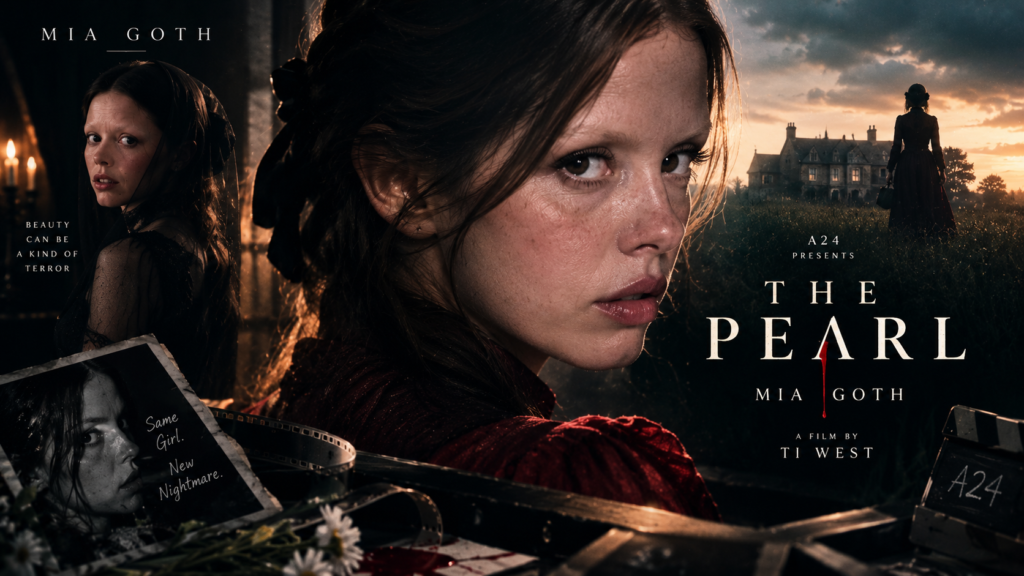
The prequel Pearl followed almost immediately. Co-written by Goth and West, the film dives into the younger Pearl’s desperate hunger for stardom against the backdrop of a 1918 farm and the lingering trauma of World War I. Shot in vibrant Technicolor tones that deliberately evoke classic Hollywood melodrama, the movie gives her a tour-de-force role. The now-famous final shot, in which she holds an agonized smile through the entire credits, became an instant cultural moment. Audiences and critics responded with equal enthusiasm. She received an Independent Spirit Award nomination for Best Lead Performance and won Best Actress at the Sitges Film Festival along with Critics’ Choice Super Awards recognition.
In 2024 the trilogy concluded with MaXXXine. Set in 1980s Los Angeles, the film follows Maxine’s determined climb toward legitimate stardom while a serial killer stalks the city. Goth has described the script as the strongest of the three and the character as a force who has already survived the unimaginable. The project allowed her to explore ambition, reinvention, and the darker side of the Hollywood dream. Across the three films she and West created a self-contained universe that comments on performance, desire, and the cost of wanting more. The collaboration remains one of the most fruitful actor-director partnerships in recent genre cinema.
The X trilogy did more than make her a household name among horror fans. It proved she could anchor ambitious, stylish projects and turn potentially campy material into something emotionally raw. The smile, the monologues, the physical commitment all became part of her public identity, yet she has always insisted the characters are extensions of herself turned up or down rather than pure invention.
Expanding Range Beyond Horror
Even as the X films dominated conversation, she continued choosing varied work. In 2023 she starred in Brandon Cronenberg’s Infinity Pool as the seductive and dangerous Gabi Bauer. The film’s body-horror and satirical take on privilege and consequence gave her another chance to unsettle audiences, and certain scenes quickly became meme fodder. The role reinforced her comfort with provocative material.
Guillermo del Toro’s Frankenstein, released in 2025, marked another significant step. She took on dual roles again, appearing as both Elizabeth and Claire Frankenstein. Working with del Toro, Oscar Isaac, and Jacob Elordi placed her inside a major studio-backed literary adaptation with the director’s signature visual poetry. The project signaled that the industry now saw her as capable of carrying prestige genre pieces on a larger scale.
Upcoming work includes a role in the Star Wars film Starfighter, scheduled for 2027, and appearances in other high-profile projects that continue to broaden her portfolio. She has spoken about wanting to avoid being boxed into any single genre. The through-line is clear: she seeks stories that demand full commitment and offer room for psychological complexity. Whether in intimate independent films or franchise tentpoles, the same intensity travels with her.
Here is a selection of key projects that trace her path:
| Film Title | Year | Role | Notes |
|---|---|---|---|
| Nymphomaniac: Vol. II | 2013 | P | Feature debut, Lars von Trier |
| The Survivalist | 2015 | Milja | Lead role, BIFA nomination |
| A Cure for Wellness | 2016 | Hannah | Gore Verbinski psychological horror |
| Suspiria | 2018 | Sara Simms | Luca Guadagnino remake |
| Emma. | 2020 | Harriet Smith | Period comedy-drama |
| X | 2022 | Maxine Minx / Pearl | Dual role breakthrough |
| Pearl | 2022 | Pearl | Co-writer, awards recognition |
| Infinity Pool | 2023 | Gabi Bauer | Brandon Cronenberg |
| MaXXXine | 2024 | Maxine Minx | Trilogy conclusion |
| Frankenstein | 2025 | Elizabeth / Claire | Guillermo del Toro |
The table only scratches the surface, yet it shows the steady climb from supporting parts in challenging films to leading roles that define cultural moments.
Personal Life, Motherhood, and Public Scrutiny
Her personal life has often intersected with her professional one. She met Shia LaBeouf on the set of Nymphomaniac. Their relationship was on-and-off for years, marked by public ups and downs. They married in a Las Vegas ceremony in 2016 that featured an Elvis impersonator; the legal status of that event was later clarified, but they continued as a couple. In 2022 they welcomed a daughter, Isabel. Parenthood arrived during the height of her X-era success. She has spoken about the difficulty of justifying time away from her child and choosing only projects that feel meaningful enough to justify the separation.
In 2025 the couple separated. In October 2026 she filed for divorce, citing irreconcilable differences and seeking primary custody of their daughter. The news arrived while her career continued its upward trajectory. Throughout the public chapters of her private life she has largely chosen discretion, preferring to let the work speak. Motherhood appears to have sharpened her sense of priorities. Roles now need to justify the time and emotional investment. That filter may explain the careful selection of recent and upcoming projects.
She has also spoken about the loneliness that can accompany a transient childhood and the way acting provided an escape and a structure. The same adaptability that helped her navigate multiple schools and countries now helps her navigate the demands of a high-profile career while raising a young child. Friends and collaborators often note her focus and professionalism on set. The public image of the unsettling screen presence coexists with a private life centered on family and craft.
Style, Influence, and the Meaning of Her Work
What makes her performances linger is the refusal to wink at the audience. Even in the most heightened, bloody, or absurd situations, she plays the emotional truth. In interviews she has said that all her characters are versions of herself turned up or turned down. That approach creates an uncanny intimacy. Viewers feel they are watching someone genuinely unraveling or striving rather than an actor hitting expected beats.
Her influence on contemporary horror is already visible. The X trilogy helped prove that stylish, character-driven genre films could find large audiences and critical respect. Younger performers and filmmakers cite the commitment she brings as a model. At the same time she has never limited herself to one lane. The arthouse roots remain visible in the choices she continues to make. The combination of commercial impact and artistic seriousness is rare and valuable.
Quotes from collaborators and the actress herself illuminate the process. Ti West has praised her deep understanding of the dual characters in X and her willingness to go to uncomfortable places. She has described the Pearl experience as life-changing and one of the most creatively fulfilling of her career. In discussing the physical demands of the prosthetic work she has been matter-of-fact, focusing on the craft rather than the hardship. That practical, unglamorous dedication is part of her appeal. She treats the job as serious work even when the material is outrageous.
Her screen presence also carries a distinctive physicality. The large eyes, the precise control of facial muscles, and the ability to hold extreme expressions for long takes create images that stick in the mind. Directors repeatedly place the camera close because her face can carry entire emotional arcs without dialogue. That gift, combined with careful role selection, has built a body of work that feels coherent even as the genres shift.
Looking Ahead and Lasting Impact
The next phase of her career already includes major franchise work and continued collaboration with distinctive directors. The Star Wars project will introduce her to an even broader global audience. Other announced and rumored roles suggest she will keep balancing large-scale films with more intimate ones. The pattern established so far is likely to continue: she chooses stories that allow transformation and emotional risk.
Her impact extends beyond individual performances. She has helped expand the conversation around what horror can be, showing that the genre can support complex female characters driven by ambition, loneliness, and desire rather than simple victimhood or pure evil. The X trilogy stands as a complete artistic statement about performance and the hunger for recognition. At the same time her earlier work in films like The Survivalist and High Life reminds viewers that she was already a serious actor before the mainstream breakthrough.
As she moves into her mid-thirties with a young child and a growing list of high-profile credits, the foundation looks exceptionally strong. The combination of technical skill, emotional availability, and careful curation of projects positions her for a long and varied career. Audiences who discovered her through Pearl’s final smile or Maxine’s determined climb now have the chance to follow her into new territories. The only safe prediction is that whatever she does next will demand full attention.
Conclusion
Mia Goth’s path from a childhood of constant movement to the center of contemporary film is a story of adaptation, discipline, and fearless choices. She turned early instability into an instrument for inhabiting other lives. The modeling years taught her the power of image. The arthouse years refined her craft. The X trilogy announced her as a major talent capable of anchoring ambitious, original work. Through it all she has maintained a focus on meaningful stories and genuine emotional risk.
Her body of work already includes some of the most memorable performances of the past decade. The unsettling smile, the hungry ambition, the quiet vulnerability all coexist in a single performer who refuses to be easily categorized. As new projects arrive and her range continues to expand, one thing remains constant: when she appears on screen, something electric happens. That quality, more than any single role or award, is why her career continues to captivate and why her future looks so promising. The story is still being written, and it remains compelling at every turn.
What is Mia Goth best known for?
Mia Goth is best known for her dual performances as Maxine Minx and Pearl in Ti West’s X trilogy. The films X, Pearl, and MaXXXine established her as a leading figure in modern horror while showcasing her ability to handle extreme physical and emotional demands. Earlier recognition came from roles in Suspiria, A Cure for Wellness, and Emma., but the trilogy brought her the widest audience and critical focus.
How did Mia Goth start her career?
She began as a teenage model after being discovered at a London music festival. Campaigns for major fashion houses followed. She transitioned to acting with her debut in Lars von Trier’s Nymphomaniac: Volume II and steadily built a résumé of independent and arthouse films before the breakthrough of the X series. The modeling background helped her understand the camera and physical transformation, skills she still uses.
Has Mia Goth won any major awards?
She has received significant recognition, including Best Actress at the Sitges Film Festival and Critics’ Choice Super Awards for her work in Pearl. She earned an Independent Spirit Award nomination for Best Lead Performance and earlier a British Independent Film Award nomination for The Survivalist. While major Academy Award nominations have not yet arrived, the critical consensus around her recent performances suggests growing awards-season attention.
What is known about Mia Goth’s personal life?
She has a daughter, Isabel, born in 2022 with actor Shia LaBeouf, whom she met on the set of her first film. The couple married in 2016, experienced periods of separation, and she filed for divorce in 2026 after a 2025 split. She tends to keep personal details private and has spoken about how motherhood influences the projects she accepts. Her multicultural background and childhood travels remain important parts of her public story.
What upcoming projects does Mia Goth have?
She appears in Guillermo del Toro’s Frankenstein and is set to star in the Star Wars film Starfighter. Additional projects continue to be announced as her profile rises. The mix of literary adaptation, franchise work, and likely further independent films suggests she will keep balancing commercial reach with artistic challenge in the years ahead.