






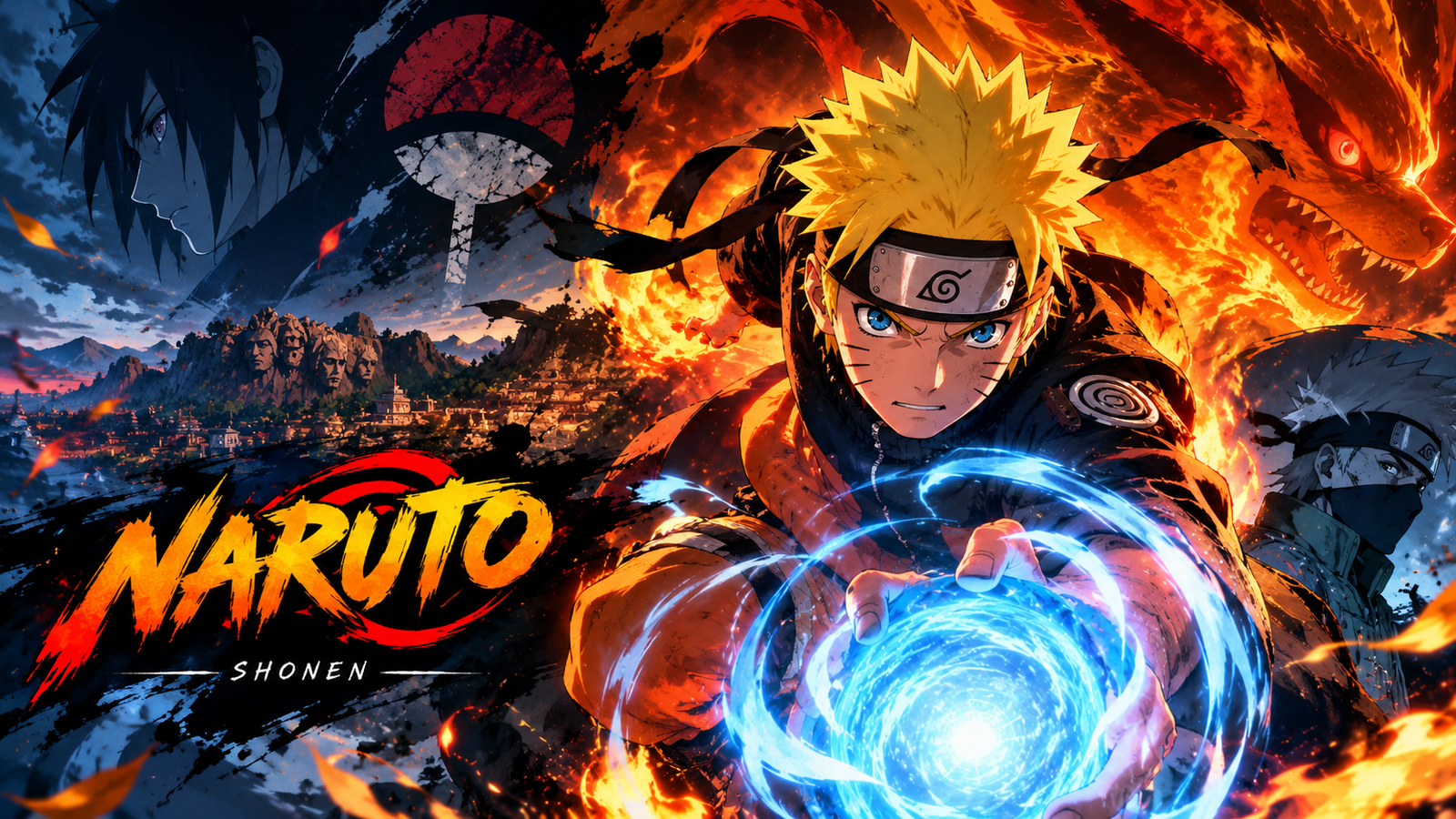
Shonen represents a powerful category of Japanese comics and animation built around intense action, personal growth, and the kinds of challenges that speak directly to younger male audiences. At its core, Shonen delivers high-stakes fights, underdog heroes who refuse to quit, and themes of friendship and determination that keep readers turning pages or binge-watching episodes for years. Think of series like Naruto, where a loud, orphaned ninja trains relentlessly to become the strongest in his village while forming unbreakable bonds along the way. These stories thrive on momentum. Characters push past their limits, face stronger opponents, and learn that true strength comes from both skill and heart.
What makes this style stand out is its focus on progression. Protagonists start weak or overlooked and gradually level up through training arcs, rivalries, and life-or-death battles. The pacing stays brisk, the humor lands easily, and the emotional payoffs hit hard without becoming overly complicated. Readers and viewers in their early teens connect with the idea that hard work and loyalty can overcome almost anything. That simple yet motivating message has helped Shonen become a global phenomenon, influencing everything from video games to Western comics and live-action adaptations.
The Origins and Cultural Roots of These Dynamic Tales
Shonen emerged from the post-war Japanese publishing industry as magazines targeted young male readers with weekly installments of adventure and combat. Publishers noticed that boys responded strongly to stories filled with competition, physical prowess, and clear goals. Early works laid the foundation by blending martial arts traditions, historical echoes, and pure fantasy. Over decades the formula refined itself into a reliable engine for long-running series that could stretch across hundreds of chapters while still feeling fresh.
Cultural values play a quiet but important role. Concepts like perseverance, respect for mentors, and the importance of the group appear again and again. A hero rarely succeeds alone. Side characters provide support, comic relief, or rival energy that forces the main character to improve. This structure mirrors real-life lessons many young readers absorb about teamwork and self-improvement. At the same time the stories remain escapist. Explosive techniques, larger-than-life villains, and tournament arcs create pure entertainment that feels bigger than everyday life.
The magazine system itself shaped the genre. Weekly deadlines pushed creators to deliver consistent excitement, cliffhangers, and visual spectacle. Artists developed dynamic panel layouts that make punches look heavier and energy blasts more dramatic. Readers grew up with these rhythms, waiting for the next issue the way earlier generations waited for radio serials. That shared anticipation built loyal communities that still discuss favorite moments decades later.
Core Themes That Drive Every Major Series
Friendship sits at the center of almost every successful entry. Characters form tight-knit groups that function like found families. They argue, train together, and stand side by side when the odds look impossible. These relationships give emotional weight to the action. A fight matters more when the hero protects someone he cares about or honors a promise made to a fallen comrade.
Determination ranks just as high. Heroes refuse to stay down. They train until their bodies break, invent new techniques mid-battle, and keep pushing long after smarter characters would retreat. This never-give-up spirit resonates because it feels achievable. Readers see ordinary kids become extraordinary through sheer effort rather than pure talent alone. The message lands cleanly: talent helps, but grit decides the outcome.
Rivalry adds another layer of fuel. Almost every protagonist has a counterpart who matches or exceeds them in skill. These rivalries push both sides to improve and often evolve into mutual respect. The competition stays personal without turning purely toxic. Watching two characters challenge each other creates some of the most memorable sequences in the medium.
Coming-of-age elements weave through the combat. Characters confront fear, loss, identity, and responsibility. A tournament might test physical limits while also forcing a hero to decide what kind of person he wants to become. These quieter moments balance the spectacle and give the action lasting meaning.
Signature Storytelling Techniques and Narrative Structure
Long-form serialization defines the experience. Stories unfold over years of real time, allowing characters to grow at a natural pace. Early chapters introduce the world and basic skills. Middle arcs raise the stakes with stronger enemies and deeper lore. Later arcs often revisit earlier ideas with new power levels and emotional maturity. This structure rewards patience. Fans who stick with a series feel like they have lived alongside the characters.
Training sequences serve dual purposes. They show visible progress and give creators room for humor or character bonding. A hero might spend weeks learning a difficult technique only to use it in a critical moment later. The payoff feels earned because the audience watched every failure and adjustment.
Tournament arcs provide natural structure and tension. Characters compete in brackets, face unexpected opponents, and reveal hidden abilities under pressure. These sections deliver pure spectacle while advancing multiple character stories at once. They also create clear short-term goals inside a longer journey.
Power systems add internal logic. Whether the energy is called chakra, ki, or something else, consistent rules help fights feel fair even when the animation turns wild. Characters exploit weaknesses, invent combinations, and adapt strategies. Smart readers can sometimes predict outcomes based on established principles, which increases engagement.
Iconic Examples That Defined the Style for Generations
Naruto stands as one of the clearest modern examples. An energetic orphan with a sealed creature inside him dreams of becoming the leader of his village. His journey mixes pranks, intense training, and battles that grow steadily more complex. The series balances lighthearted moments with heavy themes of loneliness, war, and redemption. Supporting characters receive rich development, and the world expands through flashbacks and parallel storylines without losing focus on the core friendships.
Dragon Ball and its sequels set many of the templates still used today. A young martial artist with a monkey tail travels the world, collects magical orbs, and fights increasingly powerful opponents. The series popularized transformation sequences, multi-episode fights, and the idea that every limit can be broken with enough effort. Its influence appears in almost every later action series that features power-ups and escalating threats.
One Piece brings a different flavor with its pirate adventure framework. A rubber-powered captain gathers a crew and sails toward a legendary treasure. The world feels vast and lived-in. Each island introduces new cultures, unique powers, and moral dilemmas. The emotional core remains the same: a found family that refuses to abandon one another no matter the danger.
Other titles expand the range. Some lean into sports competition, others into supernatural investigation or historical fantasy. The common thread stays consistent. Young male leads face overwhelming odds, form strong bonds, and improve through struggle. Readers recognize the pattern and still find fresh details in each new world.
Visual Style and Artistic Evolution Across Decades
Early artwork often featured thick lines, dramatic speed lines, and exaggerated expressions. Artists used motion blur and impact frames to sell the weight of every punch. As printing technology improved and digital tools arrived, panels grew more detailed. Backgrounds became richer, energy effects more intricate, and character designs more varied while still readable at small sizes.
Color choices in anime adaptations amplify the energy. Bright hair colors, glowing auras, and rapid shifts in lighting make fights cinematic. Sound design and music cue the intensity. A quiet training montage might use soft piano, while a climactic clash explodes with orchestral hits and screaming vocals. These elements work together to create an experience that feels larger than the page or screen.
Character design follows practical rules. Heroes need silhouettes that remain recognizable even in chaotic battle scenes. Distinct hairstyles, clothing details, and signature weapons help readers track multiple fighters at once. Villains often receive more extreme designs that signal danger or tragedy. The visual language communicates personality and power level before a single word of dialogue appears.
Global Impact and Cross-Media Expansion
What began as Japanese magazine content now reaches audiences on every continent. Streaming platforms made entire series available overnight. Fan translations and official releases closed the gap between Japanese and international readers. Conventions, cosplay, and online communities turned private reading into shared celebration.
Merchandise, video games, and live-action projects extend the reach. A successful series can support years of toys, clothing, and spin-off media. Games often recreate the signature combat systems with satisfying controls and multiplayer modes. Live-action versions face the challenge of translating exaggerated powers into practical effects, yet some have found dedicated audiences.
The influence flows both ways. Western creators study the pacing, character arcs, and visual energy. Elements once unique to this style now appear in American comics, animated shows, and even blockbuster films. The underdog hero who trains hard and values friends has become a universal archetype refreshed by Japanese storytelling techniques.
Educational value appears in unexpected places. Language learners use the dialogue for practice. History students notice cultural references. Psychology enthusiasts examine the motivation systems and resilience themes. Teachers sometimes assign episodes or chapters to discuss perseverance or ethical choices inside high-stakes scenarios.
Why These Stories Continue to Resonate with New Generations
Young readers still face the same fundamental challenges: finding identity, building friendships, dealing with failure, and deciding what kind of person they want to become. Shonen packages those questions inside exciting packages of action and humor. The stories never lecture. They demonstrate. A character who loses everything and still stands up again teaches more effectively than any speech.
Accessibility matters. The language stays straightforward. Jokes land without requiring deep cultural knowledge. Fights deliver clear visual cause and effect. Newcomers can jump into many series with minimal background and still enjoy the ride. Long-time fans appreciate the deeper layers that emerge on re-reads or re-watches.
Community keeps the fire alive. Online discussions, fan art, theories, and debates create ongoing conversation. A new chapter or episode becomes a shared event. Friendships form around favorite characters or rival power rankings. That social layer turns solitary reading into belonging.
The formula also adapts. Creators experiment with female leads, more diverse supporting casts, and genre mixes while preserving the core energy. Sports series, cooking competitions, and academic battles prove that the same drive for improvement works outside pure combat. The spirit remains intact even as the surface details change.
Comparing Approaches Across Different Titles and Eras
Earlier works often emphasized pure martial arts and tournament structures. Later series layered in complex world-building, political intrigue, and moral ambiguity. Some focus tightly on a single village or school. Others span oceans and dimensions. The variation keeps the category from feeling repetitive.
Pacing differences stand out. Certain stories race through arcs with constant new threats. Others slow down for character moments and world exploration. Both approaches succeed when the emotional core stays strong. Readers choose based on mood. Sometimes they want nonstop action. Other times they prefer the quieter scenes that make the next battle matter more.
Tone also shifts. Some titles stay light and comedic even during serious fights. Others dive into darker territory with genuine loss and consequence. The best entries balance both so the humor never undercuts the stakes and the drama never becomes exhausting.
Practical Tips for New Readers Looking to Dive In
Start with a completed series if you prefer knowing an ending exists. Many long-running titles still produce new material, which can feel overwhelming at first. Completed stories offer a full arc from beginning to satisfying conclusion. Once the pattern becomes familiar, ongoing series feel less intimidating.
Pay attention to the supporting cast. The main hero often receives the most screen time, yet the side characters frequently deliver the most memorable growth or comedy. Noticing their individual goals and relationships deepens the overall experience.
Take breaks during heavy training or tournament stretches if the volume feels large. The stories reward patience, but forcing progress can turn enjoyment into homework. Return when the energy feels right again.
Discuss with others. Online forums and local clubs provide recommendations tailored to specific tastes. Someone who loves tournament arcs might suggest different titles than a reader who prioritizes emotional depth or world-building.
Common Misconceptions and Deeper Realities
Some assume the category only offers shallow fight scenes. In reality the strongest entries use combat as a vehicle for character revelation. A single exchange of blows can settle years of rivalry or force a hero to confront an uncomfortable truth about himself.
Others believe the stories promote toxic masculinity. Most successful series actually reward cooperation, emotional honesty, and protecting the vulnerable. Characters who isolate themselves or chase power alone usually suffer for it. The community of friends remains the true source of strength.
Length sometimes intimidates newcomers. Hundreds of chapters can look endless. Yet the weekly or bi-weekly format was designed for steady consumption rather than marathon reading. Approaching the material at a sustainable pace reveals its careful construction.
Looking Ahead at Evolving Trends and Future Directions
Digital platforms change distribution. Creators can reach global audiences faster and experiment with shorter formats or interactive elements. Virtual reality and immersive experiences may one day let fans step inside training grounds or tournament arenas.
Themes continue to expand. Mental health, environmental concerns, and social pressure appear more frequently alongside the classic fights. The core message of growth through effort remains relevant no matter the surface topic.
Collaboration across borders increases. International co-productions and adaptations introduce new visual styles and cultural perspectives while preserving the energetic heart that first attracted readers.
A Closer Look at Power Progression and Its Narrative Role
Power progression forms the backbone of most long-running entries. Characters begin with limited abilities and gradually unlock greater potential. Each new level feels earned because the story shows the cost in time, pain, and sacrifice. Readers track these improvements the way sports fans track an athlete’s career statistics.
The system usually includes clear tiers. Early opponents test basic skills. Mid-series threats demand creative combinations. Final arcs introduce opponents who force complete reinvention of strategy. This ladder structure maintains tension across years of storytelling. Without it the fights would lose meaning.
Limitations keep the system interesting. Infinite power would remove stakes. Instead characters face recovery times, energy costs, or specific weaknesses. Smart villains exploit those gaps. Clever heroes find workarounds. The resulting chess match elevates pure spectacle into strategic drama.
Mentors accelerate growth while remaining human. They offer guidance, demonstrate advanced techniques, and sometimes fall short themselves. Their imperfections make the lessons more credible. A perfect teacher would feel distant. A flawed one who still believes in the student creates stronger emotional investment.
The Role of Humor and Emotional Balance
Comedy prevents the constant high stakes from becoming exhausting. Slapstick, witty banter, and exaggerated reactions give the audience room to breathe. These moments also humanize the characters. A hero who can laugh at himself after a humiliating training failure feels more relatable than an endlessly serious warrior.
Emotional peaks land harder because of the contrast. A quiet conversation about dreams or a shared meal after a brutal battle carries extra weight when the surrounding story has delivered nonstop action. The balance keeps readers engaged across hundreds of chapters without fatigue.
Supporting characters often carry the comedic load. Their quirks and rivalries generate running gags that reward long-term attention. A joke that lands in chapter three can pay off again two hundred chapters later, creating a sense of shared history between the story and its audience.
World-Building Techniques That Expand Beyond the Main Cast
Effective series treat the setting as a living place. Villages have histories. Organizations have internal politics. Background characters pursue their own goals even when the camera follows the protagonists. This depth makes the world feel bigger than any single fight.
Lore reveals itself gradually. Early chapters establish surface rules. Later arcs uncover older conflicts, forgotten techniques, or hidden societies. The slow drip of information rewards attentive readers and creates opportunities for major revelations that reframe earlier events.
Geography influences the action. Mountainous regions favor certain fighting styles. Ocean settings introduce unique travel challenges and sea-based abilities. Creators use the environment as both obstacle and opportunity, turning landscape into another character in the story.
Community and Fandom Dynamics Around These Narratives
Fans organize ranking debates, theory crafting, and creative works that keep discussion alive between official releases. Power-scaling conversations can grow intense, yet they demonstrate deep engagement with the internal logic of each series. Fan art and animations celebrate favorite moments and characters in personal styles.
Conventions provide physical gathering points. Cosplayers recreate iconic outfits and techniques. Panels feature creators or voice actors. The shared enthusiasm turns individual enjoyment into collective celebration.
Online spaces accelerate discovery. Recommendation algorithms and community lists help newcomers find titles that match their preferences. Spoiler culture and discussion etiquette evolve as the global audience grows more diverse.
Table of Representative Series and Their Distinctive Strengths
| Series Title | Primary Focus | Signature Strength | Approximate Length Feel |
|---|---|---|---|
| Naruto | Ninja village life and personal bonds | Emotional depth inside escalating battles | Long and layered |
| Dragon Ball | Martial arts and cosmic threats | Pure power escalation and transformation | Classic tournament energy |
| One Piece | Pirate adventure across a vast world | World-building and crew loyalty | Expansive and episodic |
| Various sports entries | Competitive growth and teamwork | Realistic effort and match tension | Focused and intense |
| Supernatural investigation styles | Mystery mixed with combat | Atmosphere and moral complexity | Varied pacing |
This overview highlights how different creators emphasize distinct elements while staying true to the core energy of action, growth, and connection.
Memorable Quotes That Capture the Spirit
One classic line reminds readers that hard work beats talent when talent fails to work hard. Another declares that a true ninja never goes back on his word. A third insists that the bonds between comrades create the strongest power of all. These statements land because the stories back them up with years of demonstrated effort rather than empty slogans.
A mentor might tell a student that the only time a person truly fails is when they stop trying. A rival could admit that competing against the hero made him stronger than he ever would have become alone. Villains sometimes deliver the most striking lines when they explain the pain that drove them toward darkness, forcing heroes and readers to confront complicated motivations.
These moments stick because they arrive at earned points in the narrative. A quote shouted during a final clash carries the weight of every preceding chapter. Readers remember the words and the context that made them matter.
Conclusion
Shonen continues to thrive because it speaks to lasting human desires for growth, belonging, and meaningful challenge. The action keeps the pulse high while the relationships and personal journeys provide substance. From the early magazine pages to modern streaming screens, the formula has proven flexible enough to reinvent itself for each new generation without losing its essential drive. Whether a reader seeks spectacular fights, found-family warmth, or quiet lessons about perseverance, these stories deliver. The next great series is already forming in some creator’s mind, ready to introduce fresh heroes who will train, fall, rise, and inspire once again. The journey remains open to anyone willing to start at the beginning and keep turning the page.
What exactly defines Shonen as action-heavy stories meant for young teen males (e.g., Naruto)?
Shonen centers on dynamic action, progressive character growth, and themes of friendship and determination aimed primarily at younger male audiences. Series like Naruto exemplify the approach with underdog heroes, intense training, rivalries, and escalating battles that reward persistence. The category prioritizes clear goals, visible improvement, and emotional bonds that make the combat meaningful rather than purely spectacular.
Why do so many people connect with these kinds of narratives over long periods?
The combination of exciting fights and relatable personal struggles creates strong emotional investment. Readers watch characters fail, adapt, and succeed in ways that mirror real efforts to improve. Long serialization allows genuine development, so fans feel they have grown alongside the cast. Community discussion and shared memories further deepen the attachment across years.
How does the power progression system typically work in popular titles?
Characters begin with limited abilities and unlock greater potential through training, experience, and critical breakthroughs. Each advance carries a cost in time or risk, keeping stakes high. Established rules and weaknesses prevent unlimited escalation from becoming meaningless. Smart strategy and teamwork often matter as much as raw strength, rewarding attentive storytelling.
Are these stories only about fighting or do they offer deeper value?
While combat drives the plot, the strongest entries use action as a vehicle for exploring friendship, identity, loss, and moral choices. Quiet moments of reflection, mentorship, and loyalty balance the spectacle. Many readers finish a series with a clearer sense of what perseverance and connection can achieve in their own lives.
What should someone new to the category try first?
Completed series with strong emotional cores provide satisfying full arcs without waiting for future releases. Titles that balance humor, character development, and well-choreographed fights tend to ease newcomers into the style. Once the rhythm feels familiar, longer ongoing adventures become easier to enjoy at a comfortable pace.