







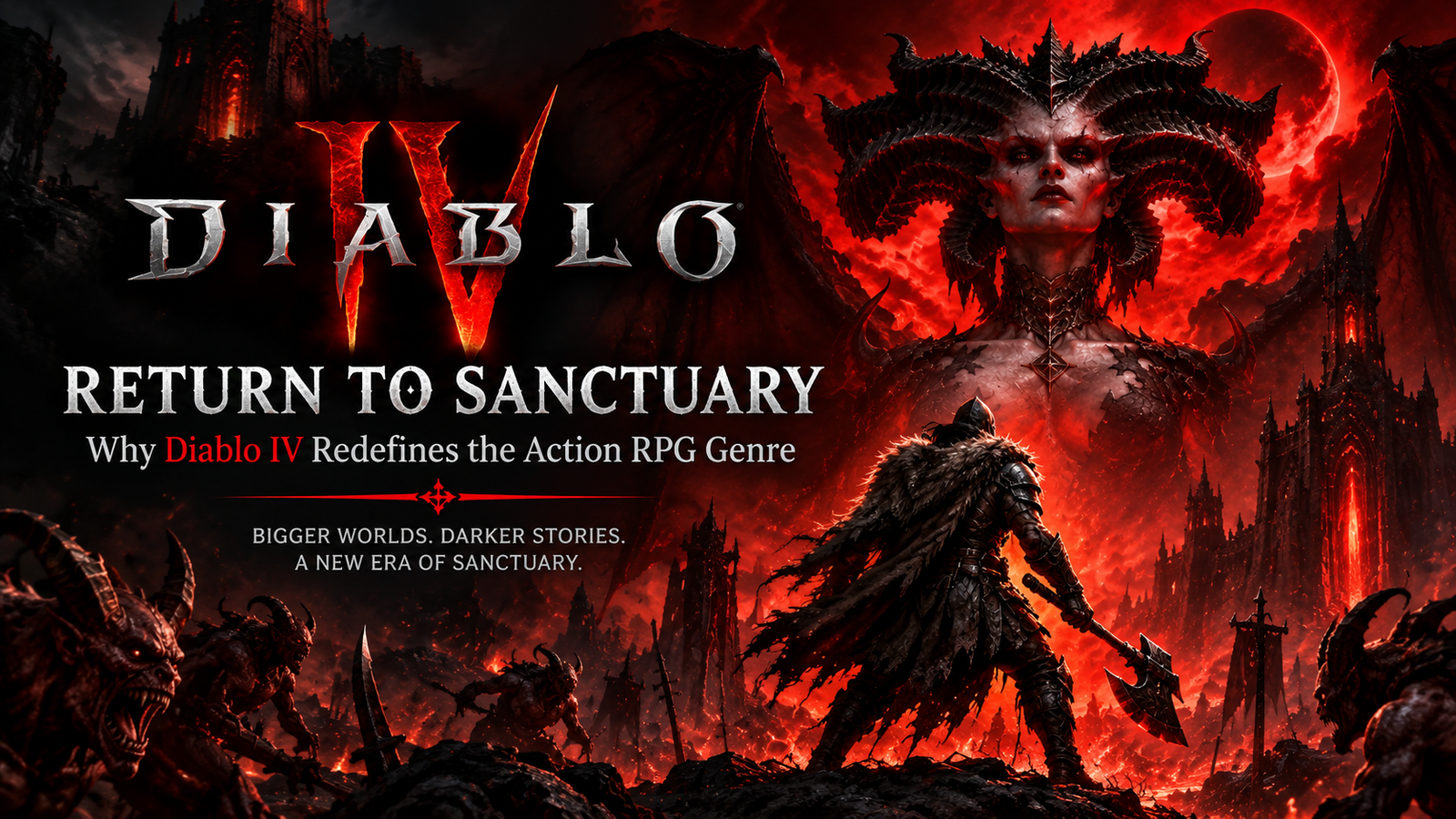
If you have ever felt the rush of carving through hordes of demons while hunting for that perfect piece of legendary gear, then Diablo IV sits right in your wheelhouse. This dark fantasy action RPG from Blizzard drops you into the fractured world of Sanctuary, where ancient evils stir and every corner hides another fight for survival. The game launched back in June 2023 and has only grown stronger with major expansions, seasonal refreshes, and constant system updates that keep the combat feeling sharp and the loot chase addictive.
Players step into the boots of a customizable hero fighting against the return of Lilith and later the schemes of Mephisto. The open world stretches across diverse regions filled with dynamic events, randomized dungeons, and world bosses that demand teamwork or clever solo strategies. What started as a solid foundation has evolved into a deep live-service experience that rewards both short sessions and marathon grind sessions. Whether you prefer crushing enemies with a barbarian’s raw power or weaving spells as a sorcerer, the game invites you to experiment and find your own path through the darkness.
The Dark Fantasy Setting That Pulls You In
Sanctuary has always been a place of uneasy peace between the High Heavens and the Burning Hells, and this installment leans hard into that tension. The story begins with the summoning of Lilith, the Daughter of Hatred, whose influence spreads corruption across the land. You follow a narrative that mixes personal stakes with large-scale cosmic threats, introducing memorable characters like Lorath Nahr and Neyrelle while revisiting familiar locations with fresh twists.
Later expansions push the story further. Vessel of Hatred takes the fight into the jungles of Nahantu as Mephisto’s influence grows, and Lord of Hatred brings the conflict to the ancient isles of Skovos for a climactic confrontation. The writing balances grim atmosphere with moments of hope and dark humor, making the world feel lived-in rather than purely apocalyptic. Side quests and environmental storytelling fill in the gaps, revealing how ordinary people cope with demonic incursions and forgotten curses.
Choosing Your Class and Playstyle
One of the strongest draws remains the roster of playable classes, each offering distinct fantasy and mechanical depth. The original lineup includes the Barbarian who swings multiple weapons with brutal force, the Druid who shifts between human, werewolf, and werebear forms while commanding nature, the Necromancer who raises armies of the dead, the Rogue who mixes melee precision with ranged traps and shadows, and the Sorcerer who channels elemental destruction from afar.
Vessel of Hatred added the Spiritborn, a class that channels jungle spirits for agile, spirit-powered combat. Lord of Hatred brought the long-requested Paladin with holy auras, blessed hammers, and divine smites, plus the Warlock who bends forbidden powers and demonic pacts. Each class features branching skill trees, multiple specializations, and room for hybrid builds that change dramatically between seasons. Theorycrafting feels rewarding because small changes in gear, aspects, or paragon boards can completely transform how a character plays.
Many veterans describe the class fantasy as the best the series has offered in years. A well-built Paladin can feel like an unstoppable force of righteousness, while a Spiritborn flows across the battlefield with almost dance-like mobility. The variety means groups often form organically around complementary strengths rather than rigid meta requirements.
Combat That Feels Visceral and Responsive
Hack-and-slash combat sits at the core, and the team refined it across multiple patches and expansions. Enemies swarm in large numbers, demanding crowd control, positioning, and smart use of cooldowns. Bosses hit hard and force pattern recognition, especially in higher torment difficulties. The feedback loop of smashing packs, watching health bars melt, and watching legendary items drop never quite loses its appeal.
Skill effects look spectacular without becoming pure visual noise. A fully invested Necromancer can flood the screen with skeletons and blood magic, while a Rogue blinks through enemies leaving trails of poison and shadow clones. Mobility options and defensive layers give every class tools to survive the denser endgame encounters. Controller and keyboard-and-mouse both feel solid, and the recent Switch 2 version even adds touch-screen support for inventory management.
The Loot Chase and Itemization Systems
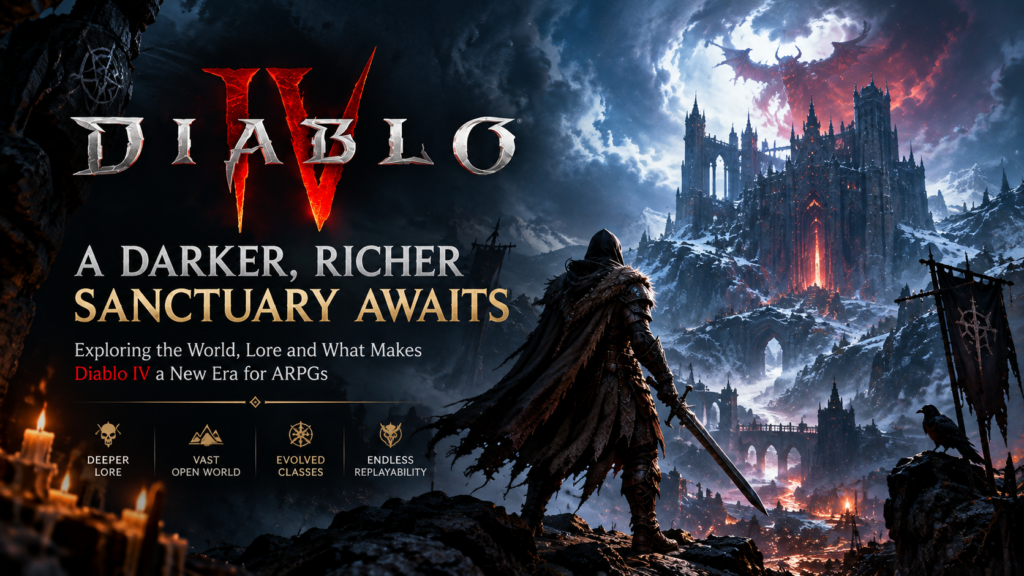
Gear progression drives long-term engagement. Players hunt for ancestral items with greater affixes, temper them for extra power, masterwork them for higher ranks, and socket runes or gems for further customization. The return of systems inspired by earlier games, such as the Horadric Cube for transmutation and talismans for set-style bonuses, gives more agency over the loot you find.
Seasons frequently tweak drop rates, introduce new unique items, or add seasonal currencies that accelerate power spikes. The result is a satisfying sense of continuous improvement. Even after hundreds of hours, finding a perfectly rolled piece that enables a new build still sparks that classic Diablo excitement. Trading remains limited to certain items to preserve the personal power fantasy, while the stash and shared account systems make managing multiple characters practical.
Seasons Keep the Experience Fresh
Every few months a new season launches, resetting characters on the seasonal realm while offering fresh mechanics, story beats, and rewards. Seasonal characters start from level one but can skip the campaign if you have already completed it once. At season’s end they move to the eternal realm, letting you keep progressing on a more permanent character.
Themes have ranged from blood-themed vampires to butcher transformations and now the Season of Hell’s Legacy, which celebrates the franchise’s thirtieth anniversary by bringing back echoes of the Prime Evils and a spectral Deckard Cain. These limited-time systems encourage experimentation and prevent the meta from stagnating. Many players treat seasons as the primary way to experience the game, treating the eternal realm as a more relaxed long-term playground.
Endgame Activities That Scale With You
Once the campaign ends, a wide menu of activities opens up. Helltides flood zones with denser enemies and valuable chests. Nightmare Dungeons offer scalable challenges with affixes that change the rules of engagement. The Pit of the Artificer tests pure power for high-tier rewards and unlocks higher torment difficulties. Infernal Hordes, lair bosses, world bosses, and the newer War Plans system let players build customized progression playlists with modifiers that increase both risk and reward.
War Plans in particular stand out as a smart evolution. Instead of random activity hopping, you construct a sequence of preferred content and layer challenges that make the run more lucrative. Leaderboards and the Tower add competitive spice for those who enjoy ranking their clear times. The difficulty system now offers granular torment tiers rather than the older world-tier gates, giving better control over challenge level.
Expansions That Expanded the Horizon
Vessel of Hatred introduced the lush yet deadly region of Nahantu, the Spiritborn class, mercenaries who fight alongside you, the Kurast Undercity time-attack dungeon, and major systems updates that benefited every owner of the base game. Lord of Hatred continued the story against Mephisto, added the isles of Skovos, the Paladin and Warlock, deeper skill-tree reworks, the Horadric Cube, and the War Plans framework. Both expansions raised the overall quality of life while delivering substantial new content.
The base game itself received free updates alongside these releases, including revised leveling, improved itemization, party finder tools, and better loot filters. The result is a game that feels markedly different and more polished than its launch version. New players in 2026 can jump into a much more complete package than early adopters experienced.
Platforms, Cross-Play, and Accessibility
You can play on PC via Battle.net or Steam, PlayStation 4 and 5, Xbox One and Series consoles, and as of mid-September 2026 the Nintendo Switch 2 with the Age of Hatred Collection. Full cross-play and cross-progression let friends on different platforms adventure together, and progress carries across devices when linked to a Battle.net account. Couch co-op remains available on consoles for local sessions.
System requirements stay relatively modest for an always-online title. An older mid-range GPU can handle 1080p on medium settings, while modern hardware unlocks higher frame rates, ray tracing options, and 4K. The Switch 2 version offers quality and performance modes targeting solid frame rates in both handheld and docked play. Accessibility options continue to expand, covering color-blind support, text scaling, and control customization.
Community, Builds, and the Theorycraft Culture
A thriving ecosystem of guides, planners, and content creators surrounds the game. Sites dedicated to build theorycrafting update with every patch and season, helping players optimize everything from early leveling to high-tier Pit pushes. Discord communities and in-game clans provide social hubs for sharing tips or organizing group content. The meta shifts regularly enough that yesterday’s top build can become today’s fun off-meta experiment, keeping discussion lively.
Many longtime fans note that the current state of balance and content density makes the game more approachable for newcomers while still offering depth for veterans. Casual players can clear the campaign and enjoy seasonal events at their own pace, while hardcore optimizers chase leaderboard rankings and perfect gear.
Tips for Getting Started Without Feeling Overwhelmed
New wanderers should first focus on finishing the main campaign to unlock the full suite of systems and the ability to skip it on future characters. Experiment with different classes during the early levels because skill points can be refunded reasonably. Pay attention to renown progression across regions, as it unlocks permanent account-wide bonuses. Once you hit the level cap, shift attention toward the Pit to unlock higher difficulties and better loot quality.
Join a clan early if social play appeals to you. Use the party finder for group activities when needed. Keep an eye on seasonal journey objectives for free rewards and a structured path through the new content. Most importantly, prioritize fun over pure efficiency in the beginning. The systems reward engagement more than perfect optimization during the first several dozen hours.
Why the Game Continues to Hold Attention Years Later
Blizzard’s willingness to overhaul core systems rather than only adding content has paid dividends. Itemization feels more purposeful, progression smoother, and the endgame denser than at launch. The combination of strong class fantasy, satisfying combat, and regular seasonal novelty creates a loop that many action RPG fans find hard to put down. The dark atmosphere, excellent soundtrack, and sense of shared world still stand out in a crowded genre.
Critics and players alike have noted that the title has improved substantially since its rocky early seasons. What began with some frustration around loot and endgame now ranks among the stronger live-service action RPGs available. The thirtieth anniversary celebrations and continued support signal that Sanctuary will remain active for years to come.
Here is a quick comparison of the major playable classes and their core strengths:
Class | Primary Style | Strengths | Ideal For Barbarian | Melee power | High toughness, weapon mastery, area damage | Players who enjoy tanking and smashing packs Druid | Shapeshifting hybrid | Versatility, nature magic, crowd control | Those who like switching forms and pet support Necromancer | Minion and blood magic | Army management, sustained damage | Fans of commanding undead hordes Rogue | Agile melee and ranged | Mobility, traps, high single-target | Players who prefer speed and precision Sorcerer | Elemental caster | Burst damage, crowd control, mobility spells | Magic users who love screen-clearing power Spiritborn | Spirit-channeled combat | Fluid movement, spirit abilities | Those seeking a fresh, agile fantasy Paladin | Holy warrior | Auras, healing support, divine smites | Players wanting righteous power and group utility Warlock | Forbidden magic | Demonic pacts, control, unique resource play | Fans of darker, risk-reward spellcasting
One veteran player summed up the appeal well: “After all the updates and expansions, it finally feels like the Diablo experience I always wanted—dark, deep, and constantly evolving without losing the pure joy of the loot chase.”
Another longtime fan noted, “The seasons keep me coming back because every three months the game feels new again while still letting me use the knowledge I’ve built up.”
Looking Ahead and the Road Still Open
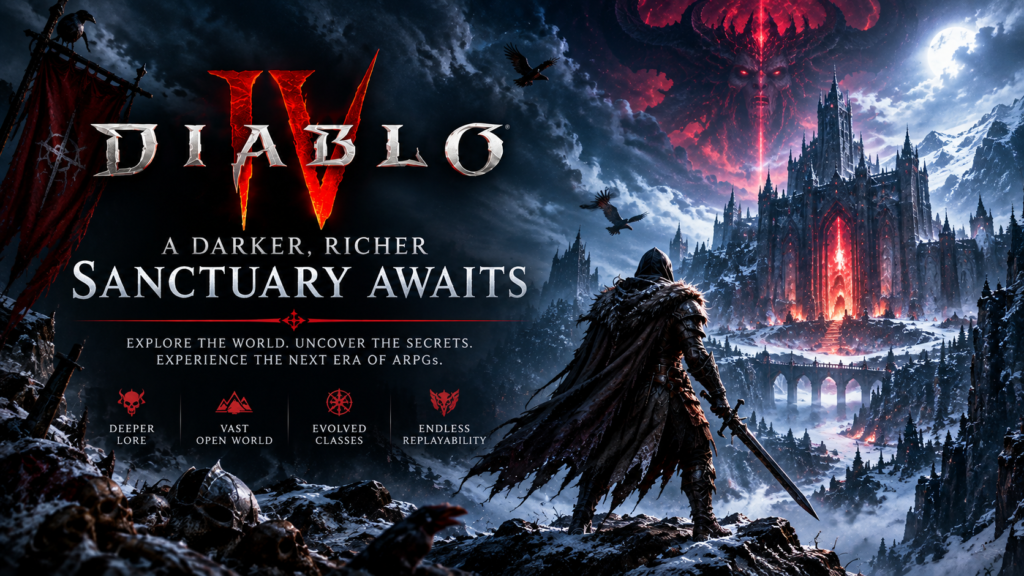
Future plans already tease the Amazon class returning in the first half of 2027 as a class pack, along with continued seasonal storytelling that builds on themes of death and legacy. The development team has shown a pattern of listening to feedback and iterating, which bodes well for long-term health. Whether you jump in for the current Season of Hell’s Legacy or wait for the next major addition, the world of Sanctuary remains ready to welcome new heroes.
The combination of polished systems, expanding content, and that unmistakable Diablo atmosphere makes this a standout title for anyone who enjoys action RPGs with a dark edge. The demons are waiting, the loot is calling, and the fight for Sanctuary continues.
Conclusion
Diablo IV has grown from a promising launch into a mature, content-rich action RPG that rewards both casual sessions and dedicated grinding. Its evolving class roster, satisfying combat, robust endgame, and regular seasonal updates create a compelling loop that few other games match in the genre. With major expansions behind it and more on the horizon, now stands as one of the best times to enter Sanctuary or return after a break. The darkness is deep, the rewards are real, and the adventure is still only beginning for those willing to pick up their weapons and face whatever emerges from the Burning Hells.
What platforms can I play Diablo IV on?
The game is available on PC through both Battle.net and Steam, PlayStation 4, PlayStation 5, Xbox One, Xbox Series X and S, and as of September 2026 the Nintendo Switch 2. Full cross-play and cross-progression are supported when accounts are linked, so progress and most purchases carry across devices. An internet connection is required because the game is always online, though some offline-style activities remain accessible depending on platform policies.
Do I need to buy the expansions to enjoy the full experience?
The base game delivers a complete campaign and access to most systems updates, but the expansions Vessel of Hatred and Lord of Hatred add substantial new regions, classes, story chapters, and endgame features. Lord of Hatred includes Vessel of Hatred, making it the simplest way for new players to obtain the full current content. Many quality-of-life improvements and systems changes arrive free for all owners, yet the new classes and zones significantly expand replayability.
How do seasons work and should I play them?
Seasons last roughly three months and let players create fresh characters on a separate seasonal realm with unique mechanics, quests, and rewards. Completing the campaign once on any character allows future seasonal characters to skip the story. At the end of a season the character and its gear transfer to the eternal realm. Most active players focus on seasonal content for the new systems and fair starting ground, while the eternal realm serves as a more permanent space for continued progression.
Is Diablo IV beginner-friendly in 2026?
Yes. Multiple systems overhauls have smoothed early progression, improved loot feedback, and clarified difficulty options. New players can complete the campaign at a comfortable pace, unlock account-wide bonuses through renown, and then transition into seasonal or endgame content with better tools than existed at launch. Community guides and in-game party finder further reduce the learning curve for those who want help with builds or group activities.
What makes the current version different from the launch experience?
Launch focused heavily on the campaign and a more limited endgame. Subsequent updates and two major expansions overhauled itemization, difficulty progression, skill trees, and activity variety. New classes, regions, the War Plans system, improved crafting options, and regular seasonal themes have transformed the long-term loop. Many systems that once frustrated players now feel more rewarding and player-friendly while preserving the core demon-slaying fantasy.