






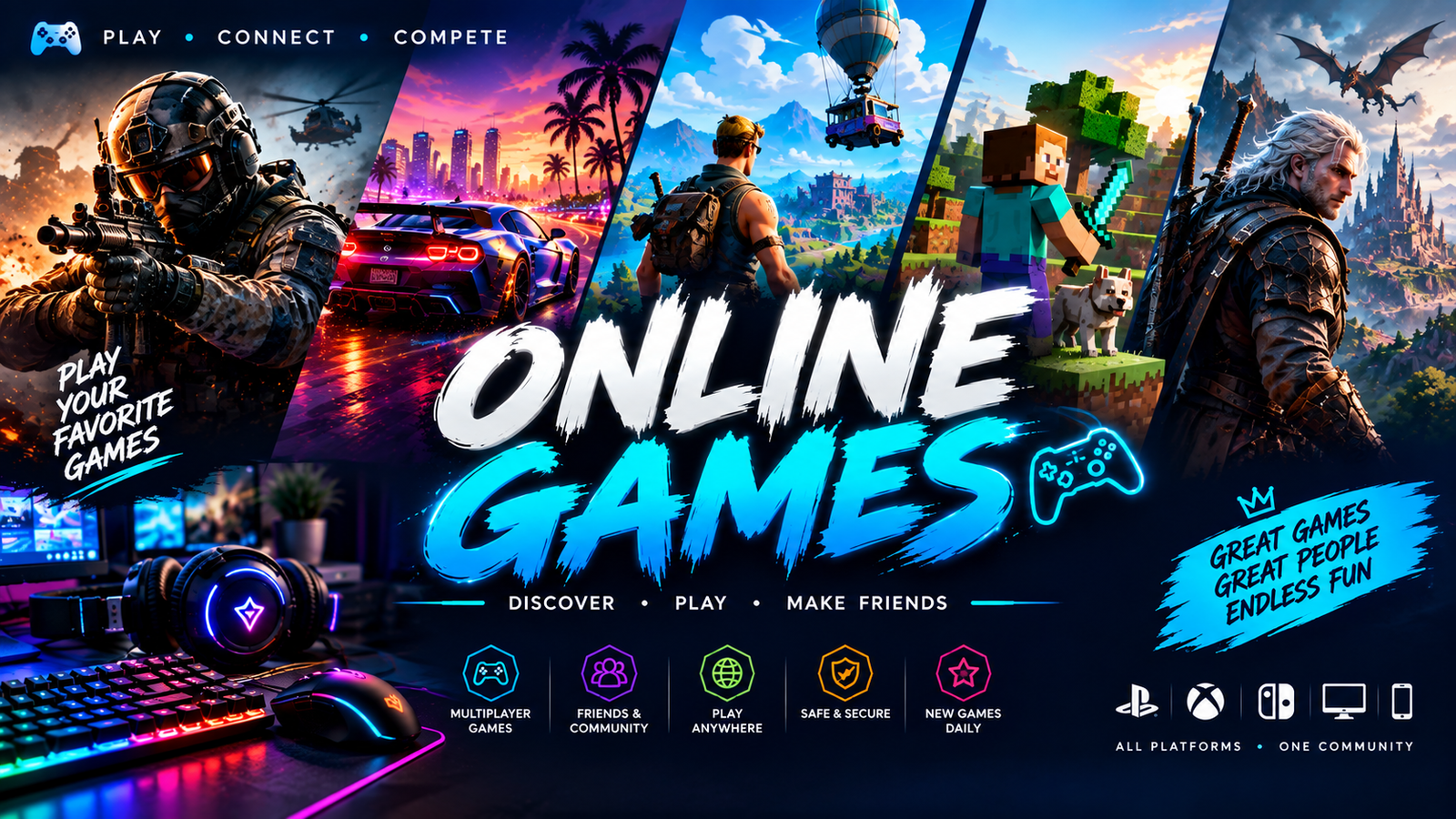
Stepping into the world of online games feels like opening a door to endless possibilities. Whether you are killing time on a lunch break, teaming up with friends across continents, or chasing competitive glory, these digital experiences have become a core part of modern entertainment. Millions log in every day to explore vast worlds, solve puzzles, battle rivals, or simply chat while playing. The appeal is universal because online games meet people exactly where they are—on phones, browsers, consoles, or PCs—and deliver instant connection and fun.
What makes them special is the living, breathing community behind every match or session. You are never truly alone. Someone on the other side of the screen is laughing at the same joke, coordinating a strategy, or celebrating a hard-won victory with you. In 2026 the landscape continues to expand with better cross-play, smarter AI companions, and richer user-generated content. This guide walks you through everything you need to know, from the basics to the latest trends, so you can dive in with confidence and get the most out of every session.
Understanding What Online Games Really Are
Online games are digital experiences that require an internet connection so players can interact with others or with shared game worlds in real time. Unlike single-player titles that live entirely on your device, these experiences open the door to multiplayer matches, persistent worlds, and social features that keep the action fresh. You might join a quick browser match while waiting for a bus or spend hours in a massive shared universe with thousands of other people.
The beauty lies in accessibility. Many titles run smoothly on modest hardware, and free-to-play models let almost anyone start without a big financial commitment. Whether the focus is competition, cooperation, creativity, or pure relaxation, online games adapt to different moods and schedules. They have grown far beyond simple pastimes into full cultural phenomena that influence music, fashion, language, and even career paths.
A Brief Look at How Online Games Evolved
The roots of online games stretch back to the early days of computer networks. Text-based multi-user dungeons in the late 1970s and early 1980s let players explore fantasy worlds together through typed commands. Those experiments laid the foundation for everything that followed. As internet speeds improved and graphics advanced, the 1990s brought graphical multiplayer titles that felt revolutionary at the time.
The early 2000s marked a turning point with the rise of massively multiplayer online role-playing games that attracted millions of subscribers. Suddenly virtual worlds felt permanent and social. Mobile technology later exploded the audience even further, putting play in everyone’s pocket. Browser-based experiences and free-to-play models removed more barriers. Today the scene includes everything from quick mobile sessions to high-stakes competitive arenas streamed to global audiences. Each era built on the last, turning isolated experiments into a global industry that engages billions of people.
Exploring the Many Types of Online Games
One of the greatest strengths of online games is the sheer variety of experiences available. Massively multiplayer online role-playing games invite you to create a character and live inside a persistent world filled with quests, guilds, and ongoing stories. You can spend months leveling up, crafting gear, and forming lasting friendships with people you may never meet in person.
Battle royale titles drop large groups of players into a shrinking map where only one person or team survives. The tension builds with every circle that closes, and no two matches ever feel exactly the same. Multiplayer online battle arenas focus on strategic team fights where players choose unique characters and work together to destroy the enemy base. First-person shooters deliver fast-paced action from the character’s viewpoint, rewarding aim, map knowledge, and communication.
Casual and puzzle experiences thrive on mobile and browser platforms, offering short sessions that fit into busy days. Simulation and sandbox games let creativity run wild as players build, farm, or design entire worlds. Sports and racing titles recreate real competitions with online leagues and ranked matches. The range is so wide that almost every personality and play style finds a natural home.
Why So Many People Love Playing Online Games
Playing online games delivers more than simple entertainment. Many players report improved problem-solving skills because the best titles constantly present new challenges that demand creative thinking. Team-based experiences strengthen communication and cooperation as groups coordinate strategies under pressure.
Social benefits stand out clearly. Shared victories and lighthearted failures create bonds that often extend beyond the screen. For some, online games become a low-pressure way to practice language skills or simply stay connected with distant friends and family. The sense of progress and achievement when mastering a difficult mechanic or climbing a ranked ladder can boost confidence in everyday life as well.
Stress relief is another frequent reason people log in. Immersing yourself in a different world for a while can reset the mind after a long day. Creative titles give an outlet for self-expression through character customization, base building, or storytelling. When approached with balance, the hobby offers genuine personal growth alongside pure fun.
Popular Titles That Define the Current Scene
Certain online games continue to dominate conversations and player counts year after year. League of Legends remains a cornerstone of competitive play with its deep strategy and constant updates. Fortnite keeps reinventing itself through creative modes and cultural crossovers that attract both casual and dedicated fans. Minecraft thrives on pure imagination, letting players and communities build almost anything they can dream.
World of Warcraft still draws long-time fans into its rich lore and large-scale raids. Valorant and Counter-Strike deliver precise tactical shooting that rewards practice and teamwork. Grand Theft Auto Online offers a living playground of chaos and creativity. Newer or resurgent titles in survival, hero shooters, and user-generated platforms also pull huge audiences. Web and mobile experiences continue to grow, giving people quick access without downloads. The common thread is strong community support and regular content that keeps the experience feeling alive.
Here is a simple overview of popular categories and what they typically offer:
| Category | Core Appeal | Typical Session Length | Best For |
|---|---|---|---|
| MMORPG | Persistent worlds and long-term progression | Hours | Story and social players |
| Battle Royale | High-stakes survival and last-player-standing tension | 15–30 minutes | Competitive and casual alike |
| MOBA | Team strategy and character mastery | 20–45 minutes | Strategic thinkers |
| FPS | Fast action and precision skill | 10–40 minutes | Reflex-focused players |
| Sandbox / Creative | Building and free expression | Flexible | Creative minds |
| Casual / Puzzle | Quick fun and mental challenges | 5–15 minutes | Busy schedules |
Getting Started Without Feeling Overwhelmed
Beginning your journey with online games is easier than ever. Start by deciding what kind of experience you want. Do you prefer short, casual sessions or deeper long-term commitments? Your answer will point you toward mobile titles, browser games, or more involved PC and console experiences.
Create accounts on major platforms and explore free-to-play options first. Many excellent titles cost nothing to download and play. Take time to learn the basic controls and watch a short tutorial or beginner stream. Most communities welcome newcomers, and in-game systems often pair new players with more experienced ones.
Hardware needs vary. A decent smartphone handles many mobile experiences, while a mid-range PC or current-generation console opens higher-fidelity worlds. Stable internet matters more than top-tier specs for most multiplayer sessions. Start small, experiment with a few different styles, and let curiosity guide you. The learning curve flattens quickly once you find something that clicks.
The Competitive Side and the Rise of Esports
Competitive online games have grown into a full spectator sport. Professional leagues, massive prize pools, and global tournaments turn skilled players into celebrities. Watching high-level play can be as engaging as participating because the strategies and mechanical skill on display are impressive.
Even at the amateur level, ranked ladders and seasonal rewards give structure and motivation. Many people enjoy climbing the ranks with friends or joining amateur teams. Streaming platforms have made it simple to share your own games or learn from others. The competitive scene rewards dedication, but it also offers plenty of room for friendly rivalry and personal improvement without needing to go pro.
Staying Safe and Keeping Things Healthy
Like any social space, online games benefit from a few common-sense habits. Protect personal information and use strong, unique passwords. Most platforms offer privacy settings and reporting tools—use them when needed. Be mindful of time spent and take regular breaks to protect eyes, posture, and overall well-being.
Communication can occasionally turn toxic. Mute or block tools exist for a reason, and many communities actively promote positive behavior. Parents and guardians can set limits and talk openly with younger players about online interactions. Balance remains the key. When treated as one enjoyable part of a fuller life, the hobby stays positive and sustainable.
Looking Ahead at Future Trends
The next few years promise even more innovation. Artificial intelligence is beginning to create more dynamic worlds and smarter companions that adapt to each player. Cloud gaming continues to lower hardware barriers so high-quality experiences can reach more devices. User-generated content platforms keep expanding, turning players into creators who design experiences for others.
Cross-play and cross-progression are becoming standard expectations rather than special features. Cosmetic economies and battle passes give players ways to express identity without pay-to-win pressure in many titles. Accessibility improvements are opening the door wider for players with different needs. The overall direction points toward richer, more personalized, and more inclusive experiences that still keep the core joy of playing with others.
Wrapping Up the Journey Through Online Games
Online games have transformed from niche experiments into a major cultural force that connects people, sparks creativity, and delivers endless entertainment. From quick casual matches to deep competitive scenes and expansive shared worlds, the options keep growing. The best approach is simply to explore with curiosity, prioritize fun and balance, and stay open to new experiences as the technology and communities evolve.
Whether you are a complete beginner or a longtime player looking for fresh ideas, there has never been a better time to jump in. The digital playground is waiting, full of new friends, challenges, and memorable moments. Grab a controller, open a browser, or pick up your phone, and start playing. The next great adventure is only a login away.
What exactly are online games and how do they differ from regular video games?
Online games require an internet connection so multiple players can interact in real time or share the same persistent world. Traditional single-player video games usually run entirely offline on one device. The multiplayer and social elements are what set online games apart and create the living communities that keep people coming back.
Are online games free to play or do they always cost money?
Many popular online games use a free-to-play model. You can download and start playing without paying anything. Optional purchases for cosmetics, battle passes, or extra content exist in most titles, but they are rarely required to enjoy the core experience. Some premium games still charge an upfront price, yet freeMeta Description: Discover the exciting world of online games! Explore top titles, tips, benefits, and trends in this ultimate guide to digital fun and multiplayer adventures.
Online Games: Your Complete Guide to Endless Digital Adventures
Online games have completely transformed the way people around the world spend their free time. What once required gathering friends in a physical room or arcade has now shifted into vibrant digital spaces where millions connect instantly. From casual browser-based experiences to immersive multiplayer universes that run for years, these digital playgrounds offer something for nearly every taste and skill level. Whether you are looking for quick sessions during a lunch break or deep campaigns that last dozens of hours, the variety available today is staggering. The accessibility of high-speed internet and powerful devices has made it possible for almost anyone to jump in and start playing within minutes.
The appeal goes far beyond simple entertainment. Many players form lasting friendships, join competitive teams, and even build careers around their favorite titles. The sense of community that develops inside these virtual worlds can feel as real as any offline social circle. At the same time, the constant stream of new releases, seasonal updates, and cross-platform features keeps the experience fresh. In this comprehensive guide we will explore the many sides of this phenomenon, from its early days to the cutting-edge trends shaping what comes next. You will find practical advice, insightful observations, and a clear picture of why so many people continue to return to their screens day after day.
The Evolution and History of Digital Multiplayer Experiences
The roots of what we now call online games stretch back further than many realize. In the 1970s and 1980s, early networked experiments allowed a handful of university students and researchers to compete in text-based adventures or simple graphical contests over primitive connections. Those early systems were limited by technology, yet they planted the seed for something much larger. As personal computers became more common in the 1990s, dial-up connections opened the door for broader participation. Titles that let players challenge strangers across cities or countries began to capture public attention, proving that shared digital spaces could create genuine excitement.
The real explosion arrived with the widespread adoption of broadband internet in the early 2000s. Suddenly, smooth multiplayer sessions no longer required patience for lag or frequent disconnects. Massive online worlds emerged that could support thousands of simultaneous players exploring the same map, trading items, and forming alliances. Console manufacturers followed closely, adding robust online services that turned living-room systems into social hubs. Mobile devices later joined the party, bringing bite-sized competitive and cooperative experiences to pockets everywhere. Each technological leap expanded the audience and raised expectations for what a connected game could deliver.
Today the landscape continues to evolve at a rapid pace. Cloud streaming services remove the need for expensive hardware in many cases, while cross-play features let friends on different platforms share the same match. The history of these digital activities is essentially the history of the internet itself—constantly adapting, improving, and finding new ways to bring people together across any distance.
Different Categories and Styles Available Today
The range of online games is almost endless, which is both a strength and a challenge for newcomers. Action-oriented titles emphasize fast reflexes, precise timing, and split-second decisions. Players might drop into large battlefields, race through obstacle courses, or engage in close-quarters combat where every movement counts. Strategy-focused experiences, on the other hand, reward careful planning, resource management, and long-term thinking. These can involve building civilizations, commanding armies, or solving complex puzzles alongside or against other people.
Role-playing adventures invite players to create detailed characters and live out extended stories. Progression systems, loot collection, and narrative choices keep engagement high over weeks or months. Casual and social formats prioritize accessibility and lighthearted interaction. Match-three puzzles, virtual farms, and party-style competitions allow friends or family members of widely different skill levels to enjoy time together without steep learning curves. Sports simulations recreate the thrill of real-world leagues with the added benefit of global matchmaking, while racing and flight experiences deliver pure adrenaline through realistic physics and competitive leaderboards.
Hybrid designs blur the lines between these categories. A single title might combine exploration, combat, crafting, and competitive ranked modes so that players can switch between relaxed and intense sessions depending on their mood. This flexibility is one of the reasons the overall category remains so popular. There is rarely a one-size-fits-all recommendation; the best choice depends on personal preference, available time, and the type of social interaction a player seeks.
Benefits That Extend Beyond Pure Entertainment
Many people first approach online games purely for fun, yet the benefits often reach further. Regular play can sharpen cognitive skills such as problem-solving, spatial awareness, and quick decision-making under pressure. Competitive formats teach resilience because losing is an inevitable part of improvement. Players learn to analyze mistakes, adjust strategies, and try again—habits that transfer usefully to school, work, and other real-life challenges.
Social connections form another major advantage. Shared goals inside a virtual world create natural opportunities for cooperation and conversation. Long-time players frequently report that some of their closest friendships began through a matchmaking system or guild invitation. For individuals who face geographic or social barriers offline, these platforms can provide valuable interaction and a sense of belonging. Creative expression also thrives. Custom character designs, user-generated maps, and streaming content allow talented individuals to share their imagination with wide audiences.
On a practical level, many titles encourage healthy routines through daily challenges, achievement systems, and scheduled events. While balance is essential, structured play can help organize free time and provide clear short-term goals. The key is moderation and awareness of personal limits so that the positive aspects remain front and center.
How to Select Titles That Match Your Interests
Choosing among the vast selection of online games can feel overwhelming at first. Start by clarifying what you enjoy most. Do you prefer intense competition, cooperative storytelling, creative building, or relaxed social hangouts? Answering that question narrows the field dramatically. Next, consider the time commitment you can realistically offer. Some experiences reward short daily sessions, while others shine during longer weekend marathons.
Platform compatibility matters as well. Certain titles perform best on high-end computers, while others are optimized for consoles or mobile devices. Cross-play support has improved significantly, yet it is still worth checking whether your friends can join on their preferred systems. Read recent player feedback carefully. Community discussions often highlight strengths and ongoing issues more honestly than marketing materials. Free-to-play options with optional purchases let you test the waters before investing money, which is an excellent strategy for exploration.
Finally, pay attention to the live-service model. Many modern releases receive regular updates, new seasons, and balance changes. A title that looks quiet today might become vibrant again after a major content drop. Looking at the developer’s track record for post-launch support can help predict whether a game will remain engaging months or years later.
Popular Platforms and Access Methods
Access to online games has never been more flexible. Traditional personal computers remain powerful hubs for high-fidelity graphics and complex controls. Dedicated gaming consoles offer living-room convenience and carefully curated online ecosystems that simplify matchmaking and social features. Mobile devices bring the experience anywhere, supporting both quick sessions on the go and surprisingly deep multiplayer offerings.
Cloud streaming services represent a newer option that reduces hardware requirements. By running the heavy processing on remote servers and sending video to your device, these platforms make demanding titles available on modest equipment or even smart televisions. Browser-based experiences require almost no installation and work well for lighter activities. Subscription libraries bundle large catalogs under a single monthly fee, which can be economical for players who enjoy variety.
Each access method carries its own trade-offs in performance, cost, and social features. Many people maintain accounts across several platforms so they can switch according to mood or situation. The important point is that barriers to entry keep falling, allowing more people than ever to participate.
Community, Competition, and Social Dynamics
The social layer is often what keeps players returning long after the initial novelty fades. Guilds, clans, and friend lists create small communities within the larger player base. Team-based modes foster communication and coordination skills. Spectating tools and streaming platforms turn high-level play into entertainment for wider audiences, creating celebrities and role models within the scene.
Competitive scenes range from casual ranked ladders to professional tournaments with substantial prize pools. Even players who never aim for the highest ranks often enjoy the structured challenge of climbing divisions and measuring improvement. At the same time, toxicity remains a recognized problem in certain environments. Most platforms now offer robust reporting tools, mute options, and positive reinforcement systems designed to encourage better behavior. Choosing communities that prioritize sportsmanship can make a noticeable difference in daily enjoyment.
Positive interactions frequently spill beyond the game itself. Voice chats turn into regular conversations, online friendships become offline meetups, and collaborative projects such as fan art or strategy guides strengthen the sense of shared culture. When managed thoughtfully, these digital relationships add genuine value to participants’ lives.
Safety, Balance, and Healthy Habits
Enjoying online games responsibly requires attention to a few practical matters. Account security is fundamental—strong unique passwords, two-factor authentication, and caution with suspicious links protect both progress and personal information. Parents and guardians of younger players should familiarize themselves with privacy settings, chat filters, and spending controls that most platforms provide.
Time management is equally important. Setting personal limits, taking regular breaks, and maintaining offline activities help prevent the experience from becoming all-consuming. Physical comfort also deserves consideration: proper seating, screen distance, and lighting reduce strain during longer sessions. Many titles now include built-in reminders or wellness features that support healthier play patterns.
Financial awareness matters in free-to-play ecosystems. Optional purchases can enhance convenience or cosmetics, yet they are never required for core enjoyment in well-designed titles. Establishing a clear budget and sticking to it keeps the hobby sustainable. Overall, treating digital entertainment like any other leisure activity—with intention and moderation—maximizes the benefits while minimizing potential downsides.
Emerging Trends Shaping the Next Wave
Technology continues to push the boundaries of what online games can offer. Improved networking reduces latency and expands the size of seamless worlds. Artificial intelligence is beginning to create more responsive non-player characters and dynamic events that feel less scripted. Virtual and augmented reality experiments aim to increase immersion, although widespread adoption still faces hardware and comfort challenges.
User-generated content tools are becoming more powerful, allowing players to design levels, modes, and even entire experiences that other people can enjoy. Cross-platform progression and unified accounts make it easier to move between devices without losing progress. Sustainability and accessibility are receiving greater attention from developers, resulting in better options for players with different needs and more thoughtful approaches to energy use and inclusivity.
Looking ahead, the line between games, social platforms, and creative tools is likely to blur further. Experiences that combine play, creation, and communication in fluid ways will probably attract the largest audiences. The core appeal, however, remains constant: the chance to share memorable moments with other people, no matter where they are located.
A Practical Comparison of Popular Formats
The following table highlights key differences among several common styles to help readers orient themselves quickly.
| Format | Typical Session Length | Social Style | Skill Emphasis | Monetization Common Approach |
|---|---|---|---|---|
| Fast-paced competitive | 10–30 minutes | Match-based teams or solos | Reflexes and tactics | Battle passes, cosmetics |
| Persistent world role-play | 1–4 hours or more | Guilds and open interaction | Character progression | Subscriptions or expansions |
| Casual social and puzzle | 5–20 minutes | Light cooperation or competition | Pattern recognition | Optional boosts, ads |
| Sports and racing simulation | 15–60 minutes | Ranked leagues and clubs | Timing and strategy | Seasonal content, items |
| Creative building and sandbox | Flexible | Shared servers and friends | Imagination and design | Cosmetic or tool unlocks |
This overview is not exhaustive, yet it illustrates how different designs serve different player motivations. Experimenting across categories remains one of the best ways to discover personal favorites.
“The real magic of connected digital worlds is not the graphics or the mechanics—it is the unexpected conversations and alliances that form when strangers work toward a common goal.” — Industry veteran designer reflecting on two decades of multiplayer development.
“What keeps me coming back is the feeling that every session can still surprise me, even after hundreds of hours. That sense of discovery alongside other people is hard to find elsewhere.” — Long-time community player and content creator.
These perspectives capture a widely shared sentiment: the human element elevates the experience beyond pure mechanics.
Looking Toward Sustainable and Inclusive Play
As the audience grows more diverse, developers and platforms are placing greater emphasis on inclusive design. Features such as customizable controls, color-blind modes, text-to-speech options, and flexible difficulty settings help more people participate comfortably. Community guidelines that actively discourage harassment and celebrate positive contributions create healthier spaces for everyone.
Sustainability conversations are also gaining traction. Optimizing server efficiency, offering offline or low-bandwidth modes where possible, and designing progression systems that respect player time all contribute to longer-term viability. Players themselves play a role by supporting titles and studios that demonstrate responsible practices.
The combination of technological progress and cultural maturity suggests a promising future. Online games are no longer a niche hobby; they form a mainstream form of entertainment and social interaction that continues to mature alongside its audience.
Conclusion
The world of online games offers remarkable variety, genuine social connection, and ongoing innovation. From the earliest networked experiments to today’s polished multiplayer ecosystems, the core attraction has remained the opportunity to share experiences with others in real time. By understanding the different styles available, choosing titles that fit personal preferences and schedules, and practicing healthy habits, anyone can enjoy the best aspects of this digital landscape.
Whether you are a newcomer curious about where to begin or a veteran looking for fresh perspectives, the possibilities remain wide open. New releases, seasonal events, and evolving communities ensure there is always something worth exploring. Approach the medium with curiosity and balance, and it can deliver years of entertainment, skill development, and meaningful interactions. The next memorable match, alliance, or creative project is only a connection away.
What makes online games different from single-player experiences?
Online games introduce the unpredictable element of other real people. Strategies that work against computer opponents may fail against human creativity, and the social dimension—team coordination, rivalry, or simple conversation—adds layers of engagement that solo play cannot replicate. The shared progress and live events also create a sense of participation in something larger than an individual session.
Are online games suitable for all ages?
Many titles include age ratings and parental controls that help families choose appropriately. Younger players often benefit from supervised play, restricted chat features, and titles designed specifically for family audiences. Adults can find experiences ranging from lighthearted social activities to highly competitive environments. Checking ratings and community tone before diving in remains the most reliable approach.
How can someone start playing online games with limited technical knowledge?
Begin with popular free-to-play options that offer clear tutorials and automatic matchmaking. Mobile platforms and browser-based titles usually require the least setup. Console online services often guide new users through account creation and first matches with helpful prompts. Watching short beginner videos or joining friendly community groups can accelerate the learning process without pressure.
Do online games require expensive equipment?
Not necessarily. While high-end hardware delivers the smoothest experience in demanding titles, many excellent options run well on mid-range computers, current-generation consoles, or modern smartphones. Cloud streaming services further lower the barrier by shifting processing to remote servers. Starting with less intensive games allows players to enjoy the social and competitive aspects while deciding whether to invest in upgrades later.
What should players watch for to maintain a healthy relationship with online games?
Monitor time spent, emotional reactions after sessions, and the balance with offline responsibilities and relationships. Setting clear session limits, using platform tools that track playtime, and scheduling non-digital activities help maintain perspective. If play begins to interfere with sleep, work, or real-world connections, taking a deliberate break and reassessing priorities is a wise step. Positive communities and titles that respect player time support healthier long-term engagement.